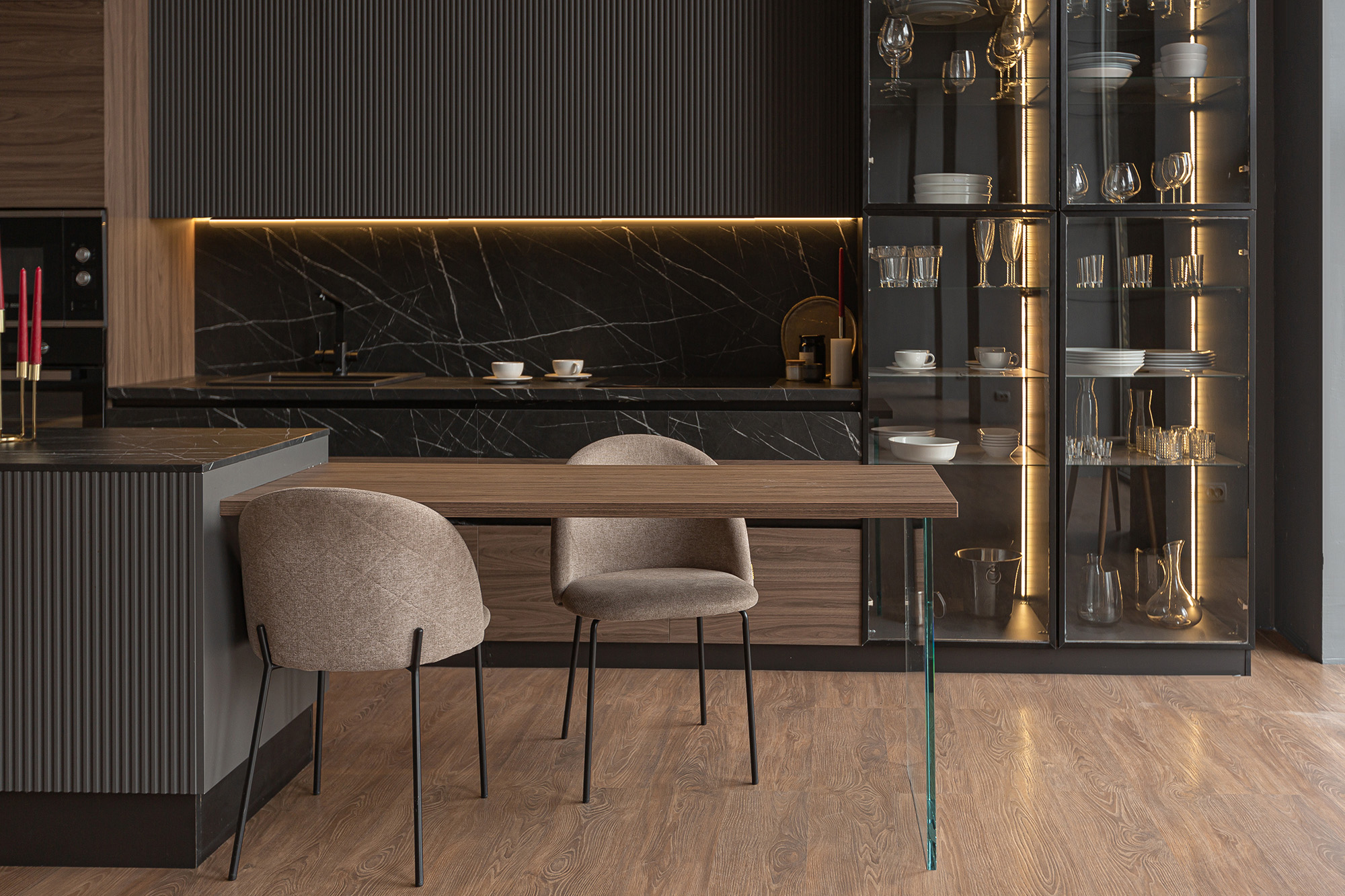
Kitchen design has spent the last several years chasing simplicity, and that focus on clean lines is not going away. What is changing is how that simplicity gets built. Instead of a totally flat, uniform door front, more homeowners are asking for texture built directly into the cabinet, through fluted paneling, ribbed detailing, and hardware that recesses into the door rather than sitting on top of it.
What Fluted Cabinetry Actually Looks Like
Fluted panels use a series of vertical grooves cut into the door or drawer front, creating a ridged, almost architectural texture. It reads as more refined than a fully flat slab door, without going anywhere near ornate or traditional. The effect works especially well on islands, where a large flat surface can otherwise feel heavy or plain.
Most fluted detailing is applied selectively rather than across an entire kitchen. A single island wrapped in fluted panels, paired with flat door fronts on the perimeter cabinets, gives the kitchen a focal point without overwhelming the space. This approach also keeps costs more contained than fluting every cabinet in the room.
Where Fluted Panels Make The Most Sense
Islands are the most common application, since they get viewed from multiple angles and benefit from added visual interest. A tall pantry cabinet or a wall of floor to ceiling storage is another strong candidate, since the vertical grooves emphasize height and make a large storage wall feel intentional rather than bulky.
Fluted detailing tends to work less well on small, choppy cabinet runs where the grooves get interrupted by hardware, appliances, or narrow door widths. If your kitchen has a lot of tight cabinet sections, it is often better to reserve the texture for one strong element, like an island or a hood surround, rather than spreading it across every door.
Groove Cut And Recessed Hardware
Alongside fluted panels, hardware itself is becoming part of the texture story. Groove cut pulls are milled directly into the edge of the door, eliminating the need for a separate knob or handle. The result is a cleaner sightline across the cabinet run, since there is nothing protruding to catch light or create visual clutter.
This detail pairs naturally with minimalist door styles but also softens a fluted panel by keeping the hardware understated. If you already have a busy backsplash or a bold countertop material, groove cut hardware keeps the cabinetry from competing for attention. It is a quieter choice than a bar pull, but it still reads as deliberate rather than an afterthought.
Choosing Materials That Hold Up To The Detail
Texture only reads well if the material and finish support it. Solid wood and high quality engineered panels take fluting cleanly, while lower grade materials can chip or splinter along the grooves over time. Matte finishes tend to show off fluted detailing better than high gloss, since gloss can create glare that washes out the shadow lines the grooves are meant to create.
Cleaning is a fair question homeowners ask about textured panels. Vertical grooves collect less dust than horizontal detailing since gravity and daily wiping keep them relatively clear, but they do require a slightly different cleaning approach than a flat door. A soft brush attachment or a damp microfiber cloth run along the groove direction keeps the detail looking sharp without extra effort.
If you like the idea of adding texture to your kitchen without a full redesign, the team at Clay Design & Material Gallery can help you decide where fluted panels or groove cut hardware make the most sense in your layout. We serve homeowners throughout Albuquerque, Rio Rancho, Santa Fe, Taos, Farmington, and Los Lunas, NM with cabinetry built around real material choices, not just trend photos.
Visit our showroom at 504 Frontage Road NE in Rio Rancho, NM, one of Rio Rancho, NM, to see fluted panel samples and hardware finishes in person. We proudly serve Albuquerque, Rio Rancho, Santa Fe, Taos, Farmington, and Los Lunas. Contact us to schedule a design consultation for your kitchen.