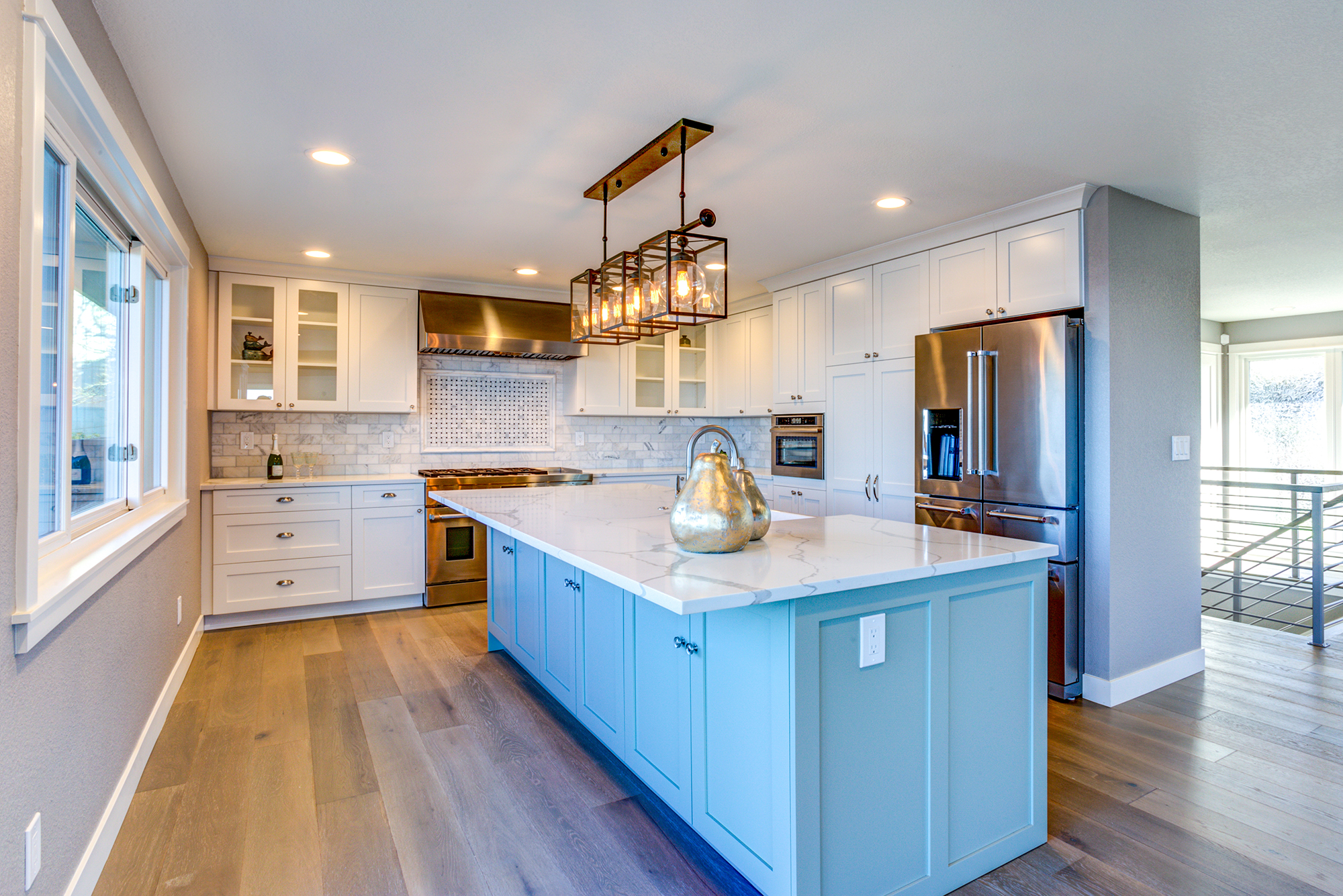
Glass-front cabinets can elevate a kitchen, or they can make it feel like a retail display. The difference is usually lighting. Without the right specs, you’ll see glare, harsh reflections, and uneven hot spots that make the cabinet contents look messy.
What glass does to light
Glass reflects point sources. That means bare diodes, exposed puck lenses, and “sparkly” fixtures show up as bright dots and streaks in the glass. Glass also reveals unevenness immediately. If one shelf is brighter than the next, or if light is concentrated in one corner, your eyes catch it every time you walk by, especially at night.
The spec stack that matters: CRI, R9, and Kelvin
If your cabinet contents include white dishware, glassware, wood boards, cookbooks, or decor, color quality matters more than people think. Look for CRI 90+ and strong R9 performance so reds don’t go dull and wood tones don’t look gray or flat. For color temperature, 2700K to 3000K is usually the sweet spot. 2700K leans warmer and more relaxed, while 3000K looks a bit cleaner and more modern. The key is consistency: if your cabinet lighting is much cooler or warmer than the rest of the kitchen, the mismatch becomes obvious through the glass.
The best fixture types for glass-front cabinet interiors
The most premium look usually comes from linear, diffused light. LED tape installed in an aluminum channel with a diffuser is a top choice because it can be continuous, hidden, and evenly distributed. Purpose-built cabinet linear fixtures can also be excellent, especially when they include a good diffuser and are sized correctly for the cabinet width. Puck lights are typically the least flattering because they create pools of light and brighter reflections, unless your design goal is intentionally “sparkly” and you’re okay with unevenness.
Placement rules that prevent glare
Where you mount the light matters as much as what you buy. A common mistake is placing a light where the source is visible through the door, which creates glare and reflections. For a calmer, more expensive look, light the back panel and the shelves indirectly. Good placement options include mounting along the top interior frame aimed down the back panel, mounting along the side stiles aimed across shelves, or using under-shelf channels that wash the back wall. Lighting from the back creates depth and makes the cabinet feel integrated into the kitchen rather than a standalone showcase.
Diffusion: the one upgrade that changes everything
Diffusion is what turns “LED dots” into a smooth, premium glow. If your cabinet lighting looks dotted or harsh, you likely need a better diffuser, a deeper channel, or a higher-density tape. COB LED tape can appear nearly dotless when paired with an opal diffuser, which is why it’s popular for glass-front applications. If shelves are thin and you can’t hide the channel easily, angled channels or deeper lens profiles help keep the source out of direct sightlines while still washing the surfaces evenly.
Brightness balance and dimming
Glass-front cabinet lighting should be dimmable. During the day, you may want it off. At night, you want a gentle glow that adds depth without becoming the brightest thing in the room. A good rule is that cabinet interiors should support the space, not compete with task lighting. If your cabinet lights overpower your under-cabinet counter lighting, the room can feel visually unbalanced. If you notice flicker at low dim levels, it’s often a driver and dimmer compatibility issue, not a “bad fixture.”
Wiring and driver placement: plan for serviceability
The cleanest installs happen when cabinet lighting is planned early. Drivers and junction points should be accessible but hidden, commonly in an adjacent upper cabinet, pantry, above-cabinet space, or another reachable location. Avoid burying drivers where you’d have to dismantle cabinetry to service them. Use proper wire management so cords and splices aren’t visible through the glass, especially on side-lit designs where wiring can show as silhouettes.
The mistakes that make glass-front cabinets look dated or cheap
The biggest issues are cool, bluish color temperatures at night, exposed light sources that reflect as bright dots, uneven shelf-to-shelf lighting, and no dimming control. Another common mistake is mixing Kelvin temperatures across the room, which glass highlights instantly. If your cabinet lighting is 4000K but the rest of the kitchen is warm, the cabinets will look sterile even if everything else feels cozy.
Glass-front cabinets look best when the lighting is soft, diffused, and color-accurate, with the source hidden from direct view. The right placement and dimming control turns the cabinet into a warm architectural feature rather than a spotlighted display. We serve Albuquerque, Rio Rancho, Santa Fe, Taos, Farmington, and Los Lunas, NM, so visit us at Rio Rancho, NM or contact us to plan cabinet lighting that looks calm, intentional, and high-end.