
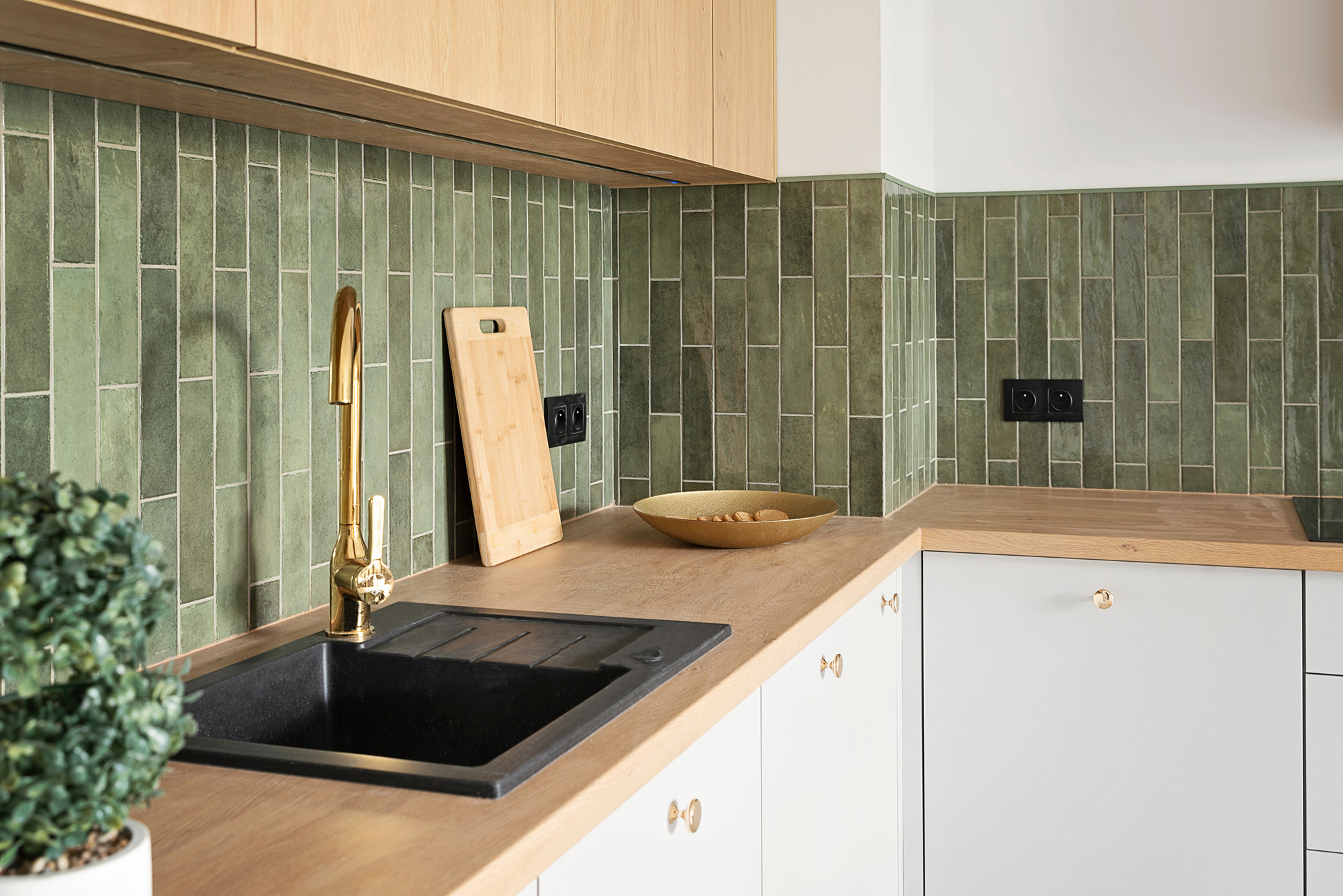
Two people standing in a showroom wanting opposite things is one of the most common situations in kitchen design, and one of the least written about. It rarely looks like a design problem at first. It looks like one person wanting warm wood and the other wanting clean white, repeated across every decision until nobody wants to talk about the kitchen anymore.
Most Kitchen Arguments Are Not About Style
Dig into a stalled cabinet color debate and you usually find something else underneath it. One person is picturing a room that is easy to keep clean. The other is picturing a room that feels warm when people are in it. Those are different goals, both reasonable, and they were never actually stated out loud. The argument attaches itself to the nearest visible decision instead, which happens to be finish.
The fastest way through is to stop discussing options and start discussing outcomes. What should this room feel like on a normal weeknight. What currently drives each of you mad about the kitchen you have. Answered separately and then compared, these questions tend to reveal far more agreement than the style conversation suggested, and they give a designer something concrete to work with.
Sort What Locks In From What Does Not
Not all kitchen decisions carry the same weight, and treating them equally wastes energy on the ones that do not matter much. Cabinet door style, layout, and countertop material are effectively locked in for a very long time. Wall color, hardware, light fixtures, bar stools and window treatments are all changeable later without touching the cabinetry.
Once a couple sees that split written down, the disagreements reorganize themselves. It becomes much easier to concede a hardware finish when you know it can be swapped in three years, and much clearer why the layout deserves a longer conversation. Spend the disagreement on the permanent decisions and let the reversible ones go quickly. Most couples find the genuinely contested list is shorter than they expected.
Split Ownership Instead of Splitting the Difference
The failure mode in kitchen design is meeting in the middle on everything. Two people who want warm walnut and cool white do not actually want beige, and a kitchen assembled from averaged compromises usually satisfies neither person. It reads as indecisive because it is.
A better approach is to divide ownership by zone or by category. Whoever cooks most often owns the working layout, because they are the one who will live with the consequences of where the prep space sits. The other person owns an equivalent area of equal weight, whether that is the finish direction, the lighting or the dining side of the room. Clear ownership produces decisive results, and decisive kitchens age better than negotiated ones.
Two Different Directions Can Both Be Right
There is also a genuine design answer that most couples do not know exists, which is that a kitchen does not have to commit to one finish. Two tone cabinetry puts one direction on the perimeter and another on the island, or warm wood below and lighter uppers above. Done deliberately this reads as a considered design choice rather than a compromise, and it has been a mainstream approach for years rather than a workaround.
The same logic applies beyond color. A pantry or a beverage area can carry a different door style from the main run. Glass fronted uppers can sit alongside solid doors. Once you stop treating the kitchen as a single decision that one person has to win, a surprising number of disagreements turn into two features rather than one argument. A designer will know which combinations hold together and which do not.
Bring the Disagreement to the Showroom
The instinct is to settle everything at home first and arrive with a united answer, but that usually removes the one thing most likely to help. Someone who works with these products daily has seen this exact disagreement many times and generally knows which specific door styles, finishes or layouts satisfy both descriptions at once, which is difficult to discover from photographs.
It also helps to see full displays rather than samples. Two finishes that look irreconcilable as small chips often sit together comfortably at full scale, and a layout that sounded like a concession can feel obviously right once you stand in it. Arriving with two honest positions and letting a designer work with both is far more productive than arriving with a compromise neither of you is happy about.
Two people wanting different things is a normal starting point for a kitchen, not a problem to solve before you begin. Clay Design & Material Gallery works with homeowners across Albuquerque, Rio Rancho, Santa Fe, Taos, Farmington, and Los Lunas, NM to find layouts and finish combinations that genuinely work for both people rather than averaging them out. Visit Rio Rancho, NM to see full displays at scale, browse our cabinet options, and contact us to book a design consultation.