
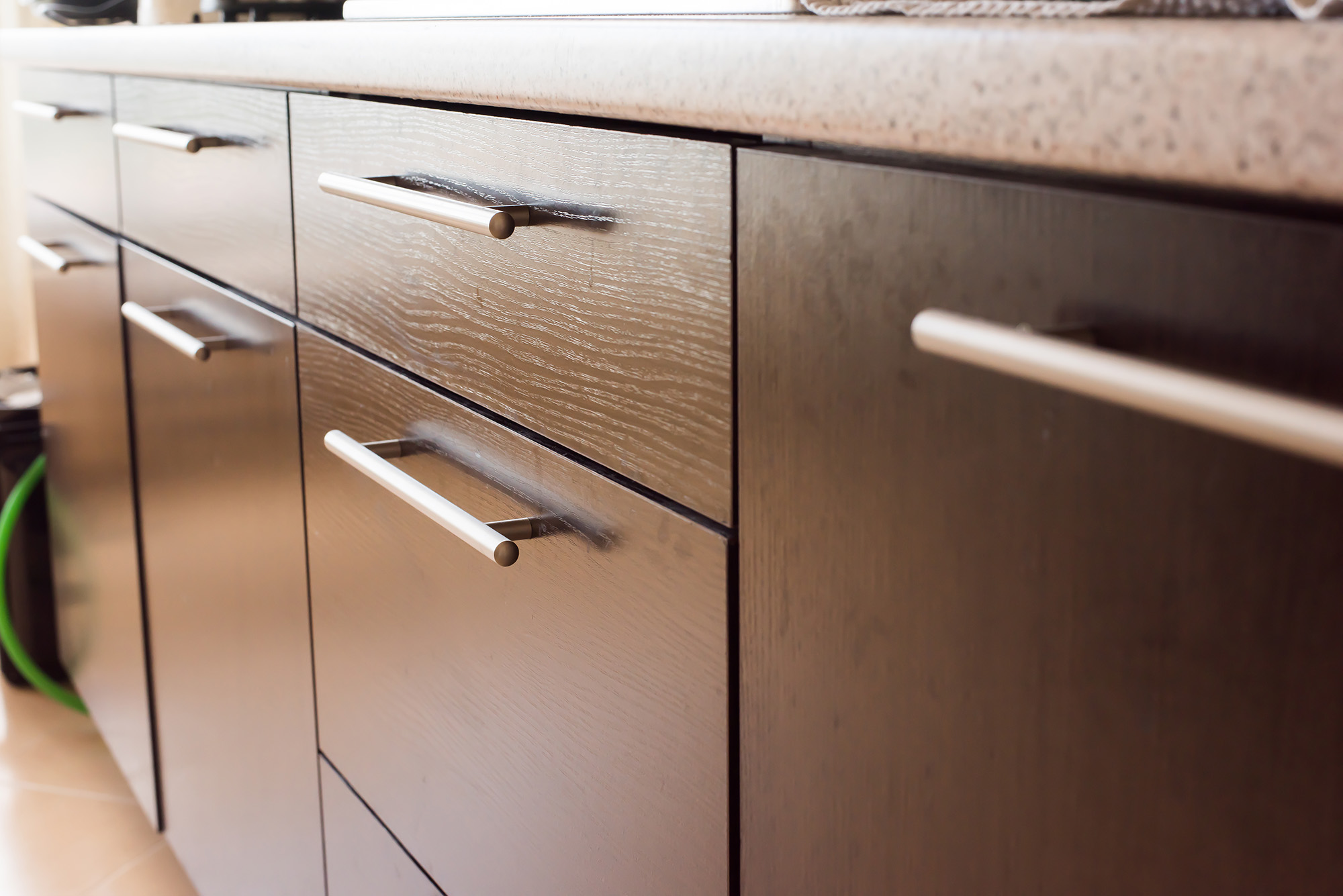
Fingerprints show up when skin oils, light reflection, cabinet color, and surface texture meet in the wrong way. This is why two cabinets in the same color family can behave completely differently. A glossy dark cabinet may show every touch, while a softly textured warm wood finish can hide the same level of daily use. The issue is not only whether the cabinet is “easy to clean.” It is whether the finish makes everyday marks visually obvious.
For busy kitchens and bathrooms, the smartest cabinet finish is the one that looks good between cleanings. Homes with children, pets, frequent cooking, or high-traffic vanities need finishes that forgive normal life. That does not mean choosing dull or basic cabinets. It means understanding how sheen, color depth, surface texture, and door profile affect what the eye sees.
Sheen Is Usually the First Clue
High-gloss finishes reflect more light, which makes smudges, streaks, and fingerprints easier to see. They can look sleek in a showroom, but in a real kitchen they often demand more wiping, especially on slab doors and drawer fronts. Gloss also tends to reveal cleaning marks if the wrong cloth or cleaner is used. In bright New Mexico homes, that reflectivity can become even more noticeable during the day.
Matte and satin finishes are usually more forgiving, but they are not all equal. A very flat matte cabinet can sometimes hold oils if the surface is too soft or porous. Satin finishes often give the best middle ground because they reduce glare while still being easier to wipe down. For homeowners comparing cabinet finishes with Clay Design & Material Gallery, it is worth touching samples and viewing them under both natural and artificial light.
Dark Colors Show More Touch Than Most People Expect
Deep green, navy, charcoal, espresso, and black cabinets can look rich and dramatic, but they usually reveal fingerprints faster than mid-tone finishes. The contrast is the problem. Oils and dust sit on the surface and catch light against the darker background. This is especially noticeable on large slab fronts, pantry doors, and cabinets near the cooking zone.
If a darker cabinet color is part of the design plan, consider using it strategically. A dark island, lower cabinets, or a vanity can be easier to maintain visually than an entire wall of dark uppers and tall storage. Hardware also matters. A pull that gives the hand a clear gripping point can reduce repeated touching on the cabinet face itself.
Wood Grain Is Naturally Forgiving
Stained wood and wood-look finishes are often easier to live with because grain movement helps disguise light smudging. White oak, walnut, alder, and warm brown finishes create visual variation, so a small fingerprint does not stand out as sharply. This is one reason natural wood cabinets have become popular again. They bring warmth, but they also handle daily life with more grace than many flat painted finishes.
The key is choosing the right level of grain. Very busy grain can fight with countertops and backsplash materials, while very smooth wood may lose some of its forgiving quality. A balanced wood tone with a satin finish often works well in kitchens that need durability, warmth, and low visual maintenance. It also pairs naturally with stone, tile, and warmer New Mexico interiors.
Door Style Changes Maintenance Too
Cabinet door style affects where fingerprints collect. Slab doors have a clean look, but because there is no frame or panel detail, touches are more visible across the flat surface. Shaker and recessed-panel doors create shadow lines that can help break up marks, but the inside corners may collect dust or residue over time. Raised-panel doors create more detail, which can hide some marks but require more careful cleaning.
For a practical kitchen or bathroom, the best door style depends on how much visual detail you want and how much cleaning patience you have. A simple shaker door in a forgiving finish often gives a strong balance. A slab door can work beautifully when paired with the right hardware and a finish that does not show every touch. The finish and door profile should be selected together, not separately.
Hardware Can Protect the Finish
Hardware is one of the easiest ways to reduce fingerprints. When people have a comfortable pull or knob to grab, they are less likely to press directly on the cabinet face. This matters most on trash pull-outs, pantry doors, wide drawers, and bathroom vanities where hands may be damp, oily, or holding something.
Edge pulls and handleless cabinets need more careful thought because they can encourage contact with the cabinet surface. They can still work, but finish choice becomes more important. A handleless dark matte slab cabinet may look minimal in photos, but it may show repeated touch patterns in real life. Good design should consider how the cabinet will be opened hundreds of times, not just how it photographs once.
The best cabinet finishes for fingerprints are usually satin or low-sheen surfaces, warm mid-tone colors, forgiving wood grains, and designs with hardware that keeps hands off the cabinet face. Glossy dark cabinets and ultra-flat slab doors can still look beautiful, but they need more planning and more realistic expectations.
Visit Rio Rancho, NM to compare cabinet finish samples in person and see how sheen, color, texture, and lighting change the look. Clay Design & Material Gallery serves homeowners across Albuquerque, Rio Rancho, Santa Fe, Taos, Farmington, and Los Lunas, NM. For help choosing cabinet finishes that stay beautiful in daily use, contact us today.