
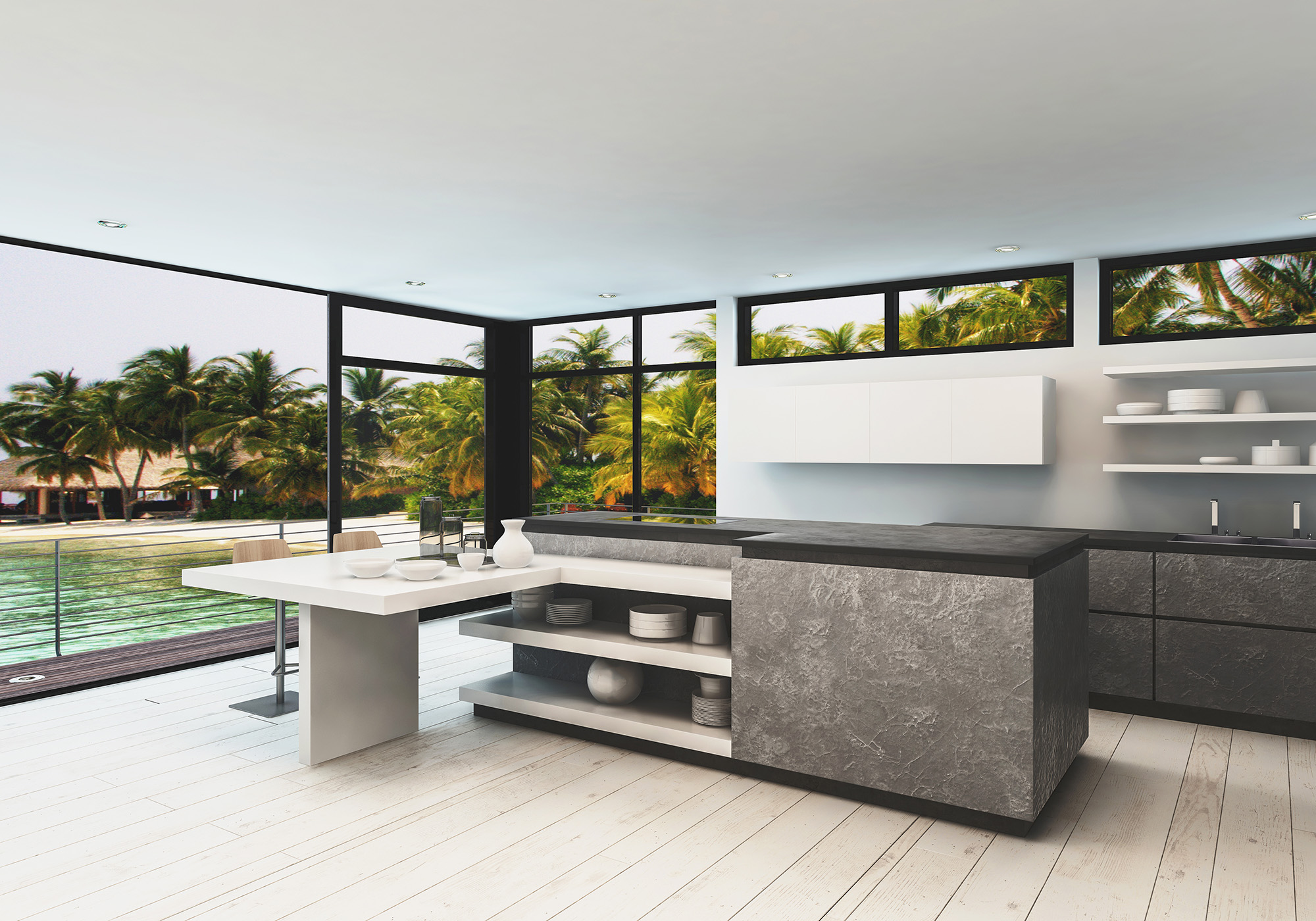
Open shelving can look gorgeous in photos and chaotic in real life. Most of the time, the issue isn’t the shelves, the dishes, or your styling.
It’s the lighting plan, especially how it interacts with vertical surfaces, glossy finishes, and the “dark holes” shelves create.
Why open shelves go wrong under normal kitchen lighting
Open shelving creates contrast. The shelf blocks overhead light, so the back wall becomes a shadow zone, and anything glossy reflects hot spots.
Recessed downlights are the usual culprit because they throw light straight down, not into the shelf cavity.
If your ceiling lights are too close to the wall, they also create “scalloping,” those bright arcs on the backsplash that make everything look busy.
The 4 lighting goals for open shelving
You’re aiming for four outcomes:
Even vertical illumination on the wall behind the shelves.
Low glare on glassware, glossy tile, and polished hardware.
Accurate color on wood tones, paint, and food.
Comfortable brightness without turning your kitchen into an operating room.
Choose the right color quality first: CRI and R9
For kitchens, CRI matters, but R9 matters more. CRI is a general color rendering score, while R9 measures saturated reds, which affects food, wood warmth, and skin tones.
If your open shelves make items look dull or “gray,” you may have decent CRI but weak R9. Look for CRI 90+ and R9 of 50+ for kitchens, and higher if you photograph content frequently.
Kelvin isn’t just preference, it’s finish-matching
Most open-shelf kitchens want 2700K to 3000K.
2700K reads warmer, cozy, and forgiving on natural wood and earthy palettes.
3000K reads cleaner and more modern, but it can make warm cabinets look slightly more yellow if your bulbs have a green shift.
If you have warm wood shelving and warm cabinets, 2700K usually blends better. If you have white uppers, cool stone, or a modern slab look, 3000K often looks sharper.
Beam angle and placement: the hidden “hot take” fix
Hot take: open shelving looks worse with “too many” recessed lights.
More cans often means more glare, more reflections, and deeper shadows under shelves. Instead, use fewer downlights placed correctly, and add directional light that washes the wall.
A good starting point is to keep recessed lights 24 to 30 inches off the wall, then choose a beam angle that spreads enough to cover the vertical plane. Narrow beams create spotlighting and harsh shadow edges. Wider beams reduce contrast and make shelves feel calmer.
Under-shelf lighting is not optional, it’s the solution
If you want shelves to feel intentional, light the wall behind them.
Use linear LED under-shelf lighting in a channel with a diffuser, mounted toward the front edge of the shelf.
Front-edge mounting pushes light back and down, reducing visible diode dots and minimizing glare in your eyes.
A diffuser lens matters because bare tape creates a dotted reflection on glossy tile and glass jars.
Choose high-density tape or COB tape if you want “dotless” light, especially with thin shelves.
Avoid glare: the “line of sight” rule
Stand where you usually cook.
If you can see the LED source directly, you’ll feel glare, even if brightness is low.
Use an aluminum channel with an angled profile or deeper lens to hide the source.
Also avoid placing shelf lights so they aim directly into the room.
They should aim at the wall and counter, not your eyeballs.
Dimming and drivers: get the compatibility right
Open shelving lighting needs dimming because nighttime brightness should be lower. The most common failure is pairing the wrong dimmer with the driver.
If you’re using standard wall dimmers, ensure the driver is compatible with the dimming method.
TRIAC dimming is common but can introduce flicker at low levels if the driver is poor quality. ELV dimmers are often smoother for LEDs, but they require compatible drivers.
If you want very stable low-level dimming, 0–10V systems can be excellent, but they’re more common in higher-end setups.
Maintenance and cleaning considerations
Open shelving means you’ll see dust. Lighting can make it look worse.
If your shelves are strongly backlit, dust texture shows more.
That’s not a reason to avoid shelf lighting, it’s a reason to choose gentler output and proper diffusion. Use a dimmer and set a reasonable default level so the shelves look intentional, not interrogated.
If your open shelves feel “busy,” don’t rip them out until you fix the lighting geometry. A few targeted changes like better color quality, wall-washing, and diffused under-shelf lighting can make the whole kitchen feel calmer and more expensive.
We proudly serve Albuquerque, Rio Rancho, Santa Fe, Taos, Farmington, and Los Lunas, NM, so visit us to plan lighting that works with your layout and finishes, not against them.