
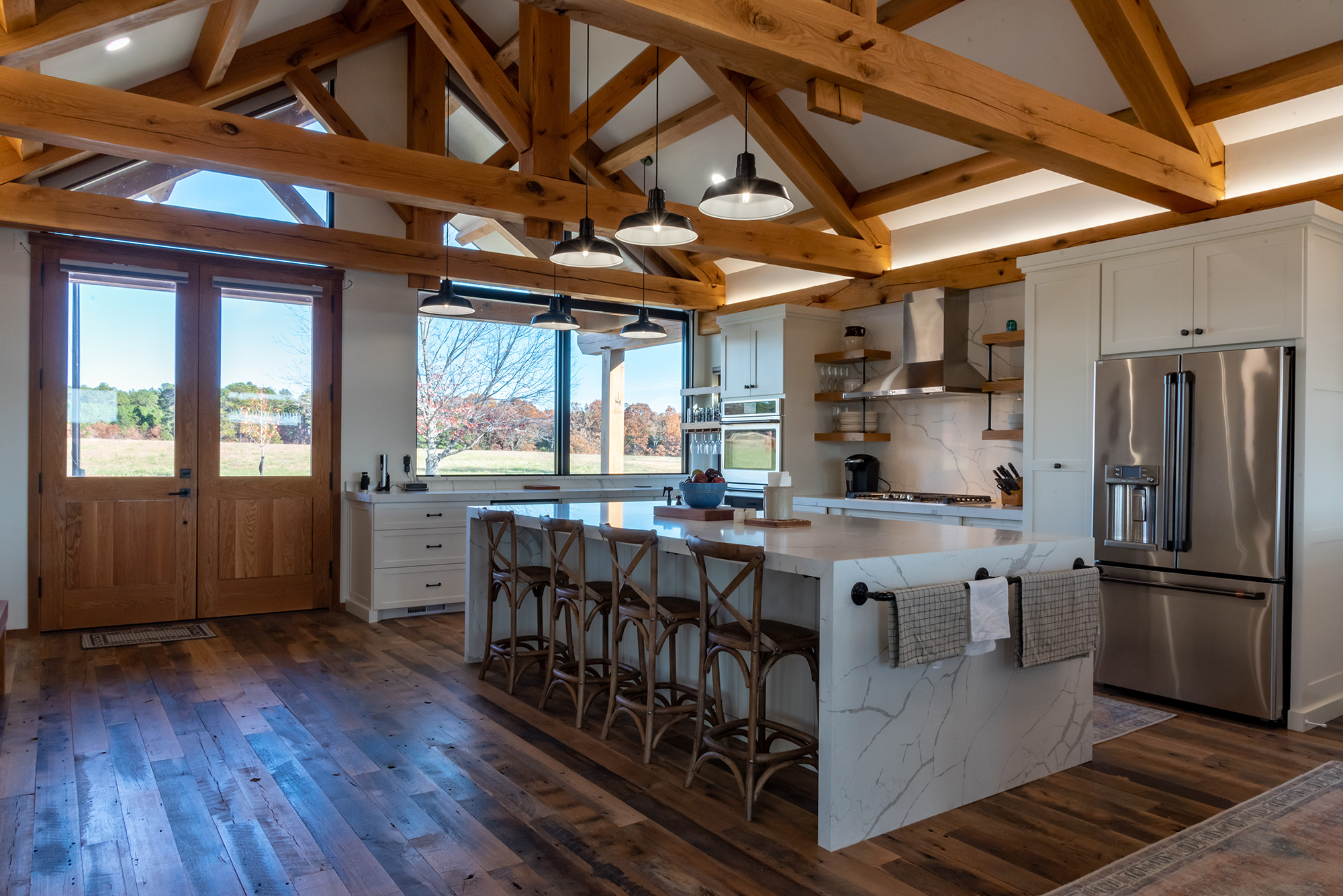
A kitchen backsplash sits in one of the hardest-working visual zones in the home. It has to handle cooking splatter, cleaning, light reflection, cabinet color, countertop movement, and the overall style of the kitchen. Because it sits at eye level, even a small material decision can change how the entire room feels. This is why the slab versus tile decision deserves more thought than simply choosing what looks good on a sample board.
For New Mexico kitchens, the decision can be especially important because light, dust, warm materials, and regional design influences all affect how surfaces read. A backsplash that looks clean and quiet in one home may feel too cold in another. A textured tile that feels rich in a Santa Fe-style kitchen may look too busy in a newer open-concept home. The right answer depends on architecture, maintenance expectations, and the other materials in the room.
Slab Backsplashes Create a Cleaner Visual Field
A slab backsplash uses a larger continuous surface, often matching or coordinating with the countertop. The main design advantage is visual calm. Without grout lines, the wall reads as one broad plane, which can make the kitchen feel more seamless and more refined. This works especially well with modern cabinets, warm wood tones, flat-panel doors, and kitchens where the countertop material has attractive veining or movement.
The practical appeal is also strong. Fewer joints mean fewer grout lines to maintain behind the sink and cooking areas. For homeowners who want a lower-maintenance surface, a slab backsplash can be easier to wipe down. The tradeoff is that slab materials can feel more formal, and if the pattern is very bold, it can dominate the room quickly. The cabinet finish and countertop selection need to be reviewed together before committing.
Tile Backsplashes Offer More Texture and Flexibility
Tile gives homeowners more control over pattern, scale, color, and texture. Handmade-look tile, ceramic, porcelain, stone, and mosaic formats can all create a different mood. Tile is especially effective when the kitchen needs warmth, movement, or a more crafted feeling. It can also help connect the kitchen to Southwest design without making the cabinetry itself too decorative.
The main technical consideration is grout. Grout color, joint width, and tile layout affect both appearance and maintenance. A tight grout joint in a color close to the tile will feel calmer and easier to live with visually. A contrasting grout line can add pattern, but it can also make the backsplash feel busier. In cooking zones, grout should be selected with cleaning in mind, not just color.
Slab Works Best When the Countertop Deserves Attention
A slab backsplash makes the most sense when the countertop material is strong enough to carry the vertical surface. If the countertop has beautiful veining, subtle movement, or a stone-like pattern that adds depth without chaos, continuing it up the wall can create a polished result. This is especially effective behind a range, around a sink wall, or in kitchens where the cabinets are intentionally quiet.
The mistake is using a slab simply because it feels more expensive. If the countertop pattern is too busy, repeating it vertically can overwhelm the room. If the cabinets are already bold, a slab backsplash may make the design feel heavy. The best slab applications have hierarchy. The slab becomes the feature, while cabinets, hardware, and lighting support it.
Tile Works Best When the Kitchen Needs Warmth
Tile is often the better choice when the kitchen needs texture, color, or a softer handmade quality. In homes with warm floors, wood cabinets, adobe-inspired details, or more traditional architecture, tile can bring the backsplash into the personality of the home. It also allows homeowners to introduce a regional material language without changing every major surface.
For a cleaner look, larger-format tile or a simple stacked layout can reduce visual noise. For a more expressive design, zellige-style surfaces, elongated subway tile, or textured ceramic can add movement. The key is to match tile energy to the cabinet and countertop energy. If the cabinets have strong grain and the countertop has movement, the tile should calm down. If the cabinets and counters are quiet, the tile can do more.
Lighting Can Make Either Choice Better or Worse
Backsplashes are heavily affected by under-cabinet lighting. Glossy tile can reflect individual light points and create glare. Heavily textured tile can cast small shadows that look dramatic at night. A polished slab can bounce light beautifully, but it can also reveal streaks if the surface is cleaned unevenly. Lighting temperature and placement should be considered before finalizing the material.
A good kitchen design review should look at the backsplash in relation to cabinet finish, countertop color, hardware finish, and lighting. The material should not be chosen in isolation. Bring samples together and view them upright, not only flat on a table. Backsplashes live vertically, and vertical surfaces catch light differently.
Slab backsplashes are best for homeowners who want a seamless, lower-grout, refined kitchen with a strong countertop story. Tile backsplashes are best for homeowners who want texture, warmth, pattern, and more design flexibility. Both can work beautifully in New Mexico kitchens when the cabinet finish, countertop, lighting, and architecture are considered together.
Visit Rio Rancho, NM to compare backsplash materials, cabinet finishes, countertops, and kitchen design combinations in person. Clay Design & Material Gallery serves homeowners across Albuquerque, Rio Rancho, Santa Fe, Taos, Farmington, and Los Lunas, NM. For help choosing the right backsplash direction for your kitchen, contact us today.