
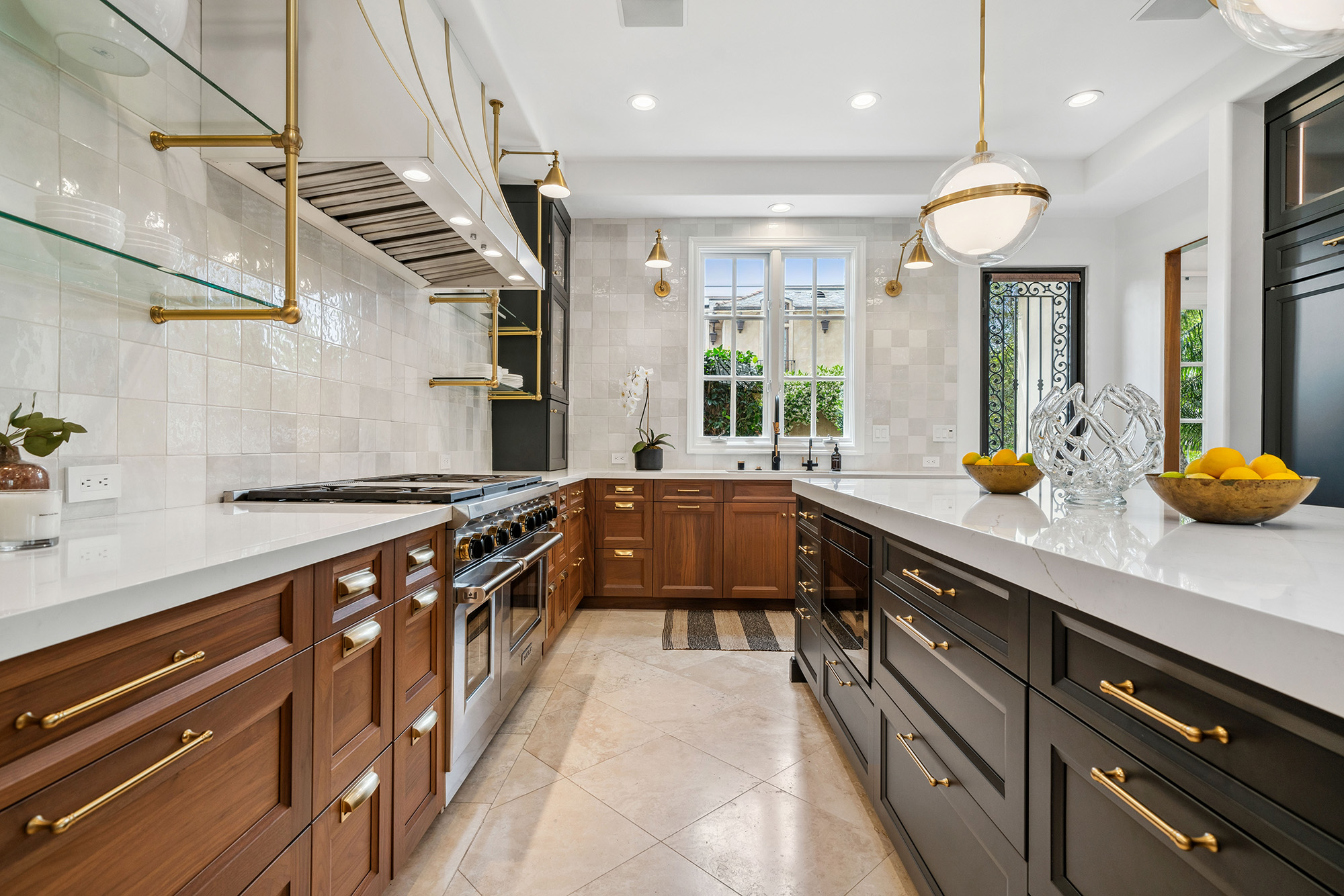
Walk through any kitchen five years after it was finished and you will find the same pattern. Some storage features get opened a dozen times a day. Others still look showroom new. The interesting part is that it is rarely the same features in every house, and the split has very little to do with what anything cost. It has to do with placement.
The Real Predictor Is Distance Not Product
The feature people use is the one that sits within arm's reach of where the task already happens. A spice pull out beside the range gets opened every time something goes in a pan. The identical pull out installed at the end of a run, six feet from the cooktop, gets used for a month and then forgotten, because reaching it means stopping what you are doing and walking. Nobody plans to abandon it. The motion just never becomes automatic.
This is why copying a feature list from someone else's kitchen rarely transfers. Their island sits where yours cannot. Their sink faces a different wall. A well chosen feature in the wrong position performs worse than no feature at all, because it also consumed cabinet space that could have held something else. Placement is the variable worth spending time on during design.
Deep Drawers Earn Their Place in Almost Every Kitchen
If there is one near universal winner, it is replacing lower cabinet doors with deep drawers for pots, pans and everyday dishes. The reason is mechanical rather than stylistic. A drawer presents its entire contents from above when you pull it out. A base cabinet with a fixed shelf asks you to crouch, reach into a dark box and move the front items to see what is behind them.
The result is that people quietly stop using the back half of door style base cabinets, which is a substantial amount of storage to surrender. Drawers recover it. This holds across kitchen sizes and cooking habits, which is unusual, and it is one of the few upgrades that tends to justify itself regardless of how someone cooks. Both configurations are available across most cabinet lines, so it is genuinely a choice rather than a constraint.
Corner Solutions Live or Die by Where the Corner Sits
Corner storage has a mixed reputation and the reason is straightforward. A rotating or pull out corner unit positioned inside the working zone, near the sink or prep counter, gets used constantly because the corner is already part of your daily path. The same unit in a corner at the far end of a run, behind where you stand, becomes long term storage for appliances you use twice a year.
Neither outcome is a failure. A corner that holds the stand mixer and the slow cooker is doing legitimate work. The point is to decide which of those two roles a given corner is going to play before choosing what goes in it, because a heavy duty pull out mechanism matters far more in a working corner than in a storage corner. That decision is easier to make in front of a floor plan than in front of a catalog.
Specialty Inserts Follow Your Actual Routine
Tray dividers for baking sheets and cutting boards are genuinely well used by people who bake or cook most nights, and they stay empty in kitchens where the oven mostly reheats. Two tier cutlery inserts work beautifully in deep drawers and feel cramped in shallow ones. Pull out trash gets used in essentially every household, because taking out the bin is a task nobody skips.
The honest way to decide is to describe your week to whoever is designing the kitchen. Not the meals you aspire to cook, the ones you actually make on a Tuesday. A designer can map those motions against the layout and tell you which inserts will sit on your daily path and which will not. That conversation takes about ten minutes and prevents most of the regret people report later.
How to Decide Before You Order
The useful test is physical. Stand in the kitchen you have, or in a showroom display, and walk through making something you cook regularly. Notice where you stop, what you reach for and in what order. Features that fall within one step of those stopping points are the ones that will get used. Features that require an extra trip probably will not, no matter how well made they are.
It is also worth knowing which decisions stay open. Cabinet interiors, inserts and organizers can often be added or changed later within an existing box, while the layout of the boxes themselves is fixed once the order is placed. Getting the drawer versus door decisions and the working zones right at the design stage matters more than finalizing every insert, and a designer will tell you which is which for the specific line you are looking at.
The right storage features are the ones that match how you already move through your kitchen, which is something worth working out on a plan before anything gets ordered. Clay Design & Material Gallery helps homeowners across Albuquerque, Rio Rancho, Santa Fe, Taos, Farmington, and Los Lunas, NM match cabinet configurations and storage options to how they genuinely cook. Visit Rio Rancho, NM to pull open real drawers and mechanisms, browse our cabinet options, and contact us to book a design consultation.