New Mexico saw twice as many wildfires in early 2026 as it did the year before, and homes in the wildland-urban interface, the zone where neighborhoods meet open land, are squarely in the path. Taos and Los Lunas homeowners are hardening their houses against embers, and that work is now reaching the bathroom.
Bathrooms rarely come up in fire-resistance conversations, which is exactly why they're worth talking about. The vanity is the largest piece of cabinetry in most bathrooms, and its core material is combustible by default, which in the right location is a detail worth changing.
What a Vanity Cabinet Is Actually Made Of
The vanity is also where smart storage lives, and if you're working with a tighter footprint, our guide to bathroom cabinet upgrades for small Rio Rancho homes covers ways to maximize it. On the material side, most stock and semi-custom vanities use a particleboard or plywood box, often made worse by the humidity of a bathroom that swells and weakens those materials over time.
Noncombustible alternatives exist and suit bathrooms especially well. Metal vanity frames and mineral-based board carcasses don't ignite, and as a bonus they shrug off the moisture that destroys conventional boxes, so you gain fire resistance and longevity in one specification.
Where Noncombustible Materials Actually Matter
You don't need to rebuild every bathroom in the house. Fire hardening is about probability, so focus the noncombustible specs where ember intrusion is most likely: bathrooms on exterior walls, those with large or older windows, and any bath that shares a wall with the garage or sits near a roofline vent.
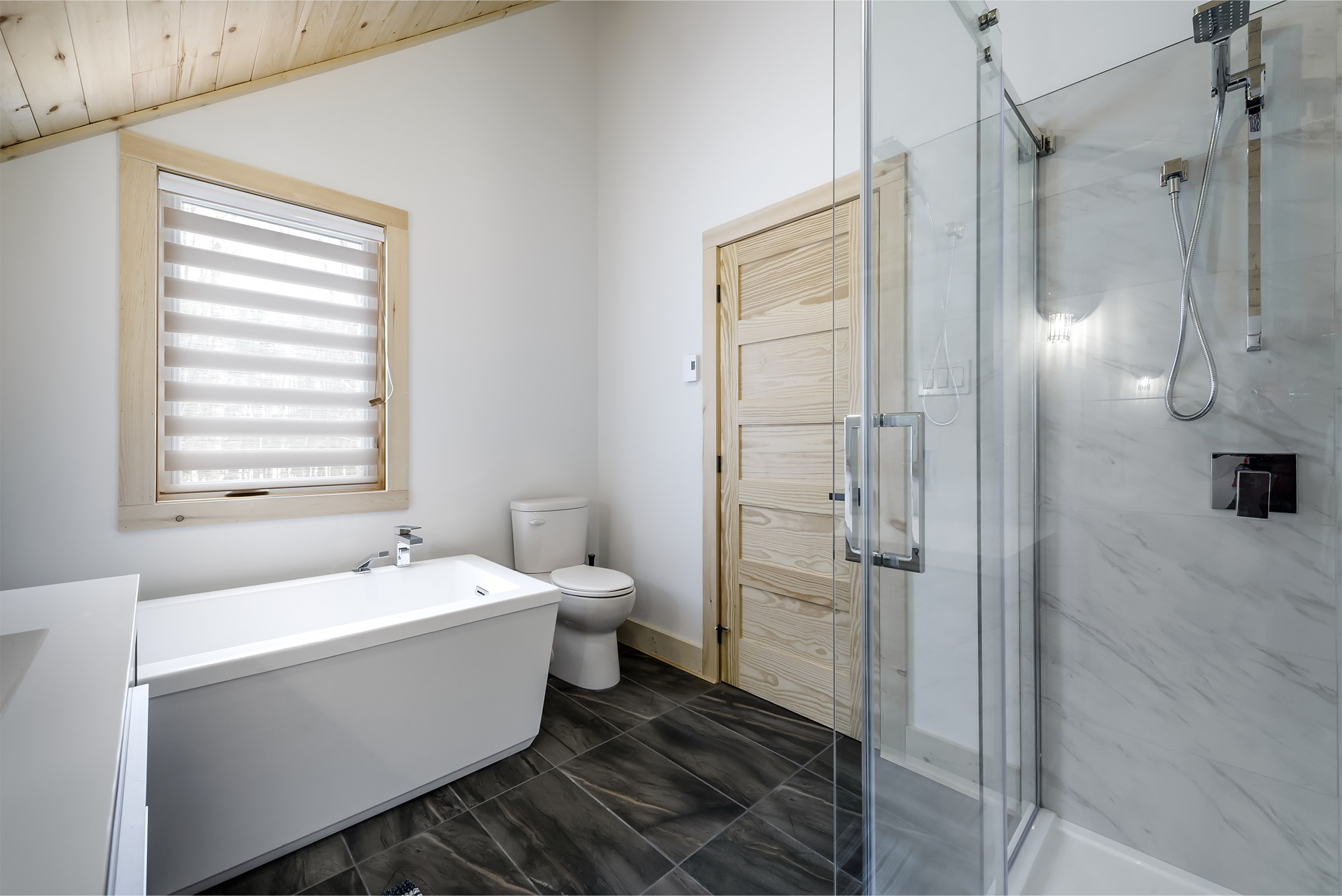
Pair the vanity core with noncombustible surfaces throughout the room. Stone or quartz countertops, porcelain and ceramic tile walls and floors, and solid-surface shower surrounds all resist ignition, and together they turn the bathroom into one of the most naturally fire-resistant rooms in the home.
An Honest Word on Expectations
Noncombustible vanities and surfaces are one layer of a larger strategy, not a force field. They matter most alongside ember-resistant vents, tempered glazing, defensible space, and a sealed building envelope, and they do their real work by removing fuel rather than stopping a fire outright.
Treated that way, the choice is a smart, low-drama upgrade. You get a bathroom that looks like any other well-designed space, holds up to daily moisture better than a wood box, and quietly contributes nothing to a fire's spread.
Choosing where noncombustible materials belong takes a walk-through of your floor plan and your exposure. At Clay Design & Material Gallery, we'll help you spec the right vanity and surface materials for the bathrooms that need them, without over-building the ones that don't.
We design for homeowners across Albuquerque, Rio Rancho, Santa Fe, Taos, Farmington, and Los Lunas, NM. Visit Rio Rancho, NM to review fire-smart bath options, or contact us today to plan a bathroom built for New Mexico's wildfire reality.